
Roofing Insurance Claims in Provo & Utah County
Utah County's Roofing Insurance Claim Specialists
An insurance claim should pay for a complete, code-compliant roof — not the cheapest scope an adjuster can put together on a tablet. Phoenix Exteriors specializes in storm-damage insurance claims across Provo, Orem, Spanish Fork, and the surrounding Utah County communities. We know what carriers will and will not pay for when the documentation is done right.
We work for the homeowner — not the insurance company. From the first inspection through final payment, we document every damaged component, identify every code-required upgrade, and submit detailed supplements when the initial scope falls short. The result is a properly funded claim and a roof installed to current Utah building codes.
We never inflate damage, fabricate scope, or offer to absorb deductibles. Insurance fraud hurts homeowners and contractors alike, and it's illegal in Utah. What we do is make sure every legitimate cost — including the ones adjusters routinely miss — is paid by your carrier.
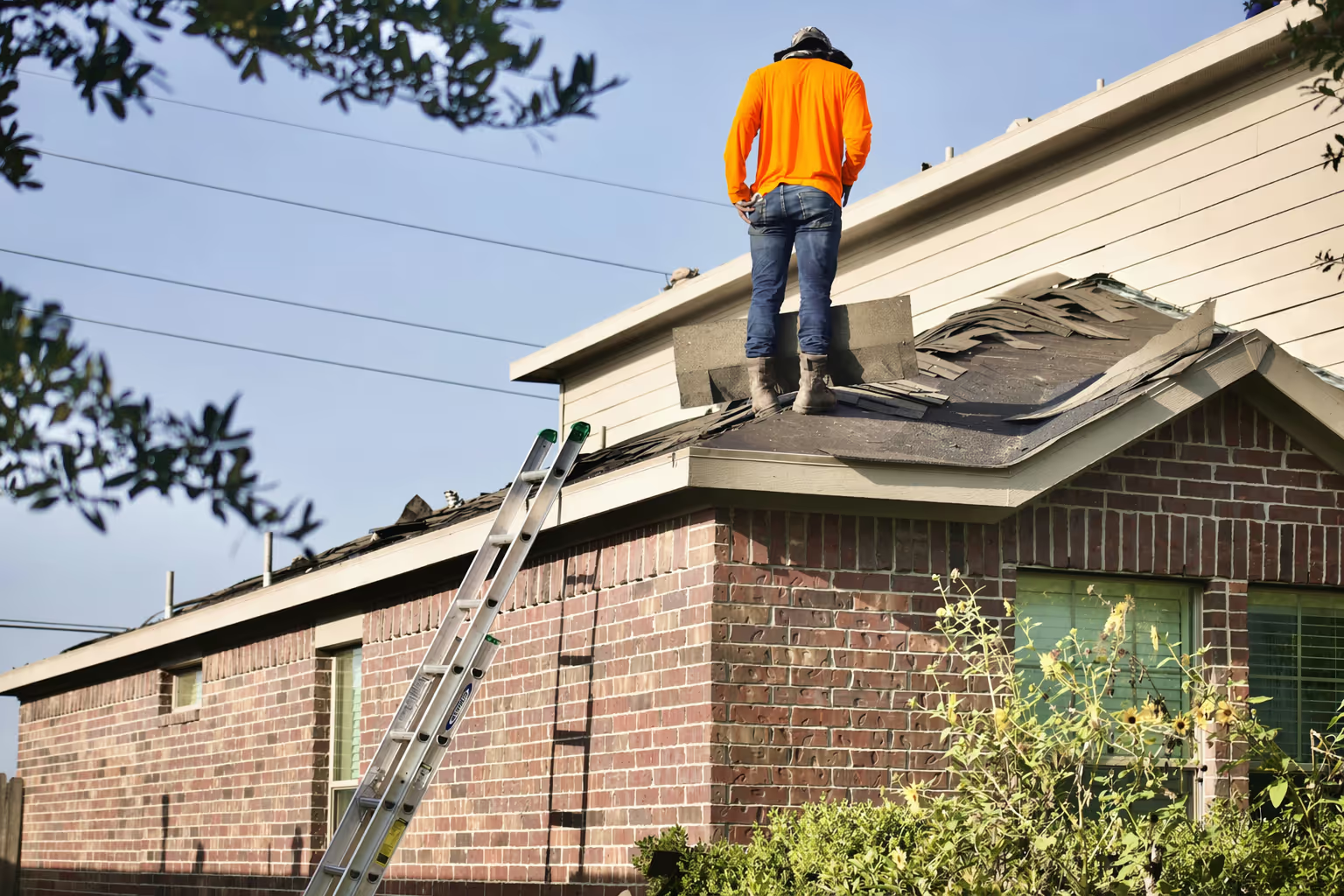
Filing a Wind or Hail Damage Claim on Your Roof
Wind is the most common roof claim we see in Utah. Canyon winds and storm gusts lift shingles at the edges, break their seal strips and strip whole sections off. Hail is quieter: Wasatch Front hail usually runs 0.75 to 1.5 inches, bruises the shingles without breaking them, and the leak shows up 12 to 24 months later. Either way, get a free inspection within a few days, then give your carrier prompt notice. The longer you wait, the harder the claim is to prove.
What Wind Damage Looks Like
Shingles that are lifted, creased or missing, most often along the edges, rakes and ridge. Ridge caps blow off first. Look for shingles in the yard and tabs that flap in the next breeze: once a seal strip breaks, the shingle creeps and goes in the next storm.
How Utah wind wears a roof →What Hail Damage Looks Like
Soft, bruised spots in the shingles, bare patches where granules came off, piles of granules in the gutters, splatter marks on metal vents, and dents in gutters and AC fins. Most of it is invisible from the driveway.
What to check from the ground →Tie the Damage to a Storm
Carriers pay for storm damage, not wear, and wind claims are the ones most often called wear and tear. We match your roof to NOAA storm reports and local wind and hail data, and photograph the damage slope by slope, so the claim rests on a storm date instead of an argument.
Protect the Roof After Wind
When wind opens up the roof, cover it before the next storm and keep the receipts. Most policies require you to protect the property from further damage, and reasonable emergency repairs are usually part of the claim. Photograph the damage before anything is covered.
Know What Your Policy Pays
Many Utah policies set the wind and hail deductible as a percentage of the home's value: at 2 percent on a $400,000 home, that is $8,000 before the carrier pays anything. And a replacement cost policy pays in two checks, while actual cash value pays the depreciated value only.
ACV vs. RCV and the deductible math →Rebuild for Wind and Hail
A claim is the cheapest moment to upgrade. For wind, what matters is a high-wind-rated shingle, commonly rated to 130 mph, and a six-nail installation. For hail, Class 4 impact-resistant shingles, which most carriers active in Utah discount on the wind and hail premium.
Is Class 4 worth it? →
Building Code Coverage Most Homeowners Miss
Utah building codes have changed significantly since most homes were built. When your roof is replaced under a covered claim, your insurance is often required to pay for upgrades that bring the roof up to current code — but only if the items are properly documented and supplemented.
Ice & Water Shield
Current Utah code requires ice-and-water shield along eaves, valleys, and roof penetrations — protection that wasn't standard on most older homes. Under Ordinance or Law coverage, your carrier pays for this upgrade.
Synthetic Underlayment
Older felt underlayment must be replaced with code-compliant synthetic underlayment across the entire roof field. We document the requirement and include it in every supplement.
Drip Edge Metal
Drip edge along eaves and rakes is now code-required and is frequently missing on Utah roofs over 15 years old. We add it to every covered replacement and supplement the cost.
Decking Replacement
Code requires sound, non-delaminated decking under new roofing. Damaged or warped sheathing discovered during tear-off is typically a covered cost — when documented with photos and submitted properly.
Ventilation Upgrades
Modern code requires balanced intake and exhaust ventilation. Older roofs frequently fail this standard. Ridge vents, soffit vents, and baffles can often be added under code coverage.
Step & Counter-Flashing
Proper step and counter-flashing at walls, chimneys, and dormers is required by current code. Caulked or improperly flashed penetrations must be redone — and the cost is recoverable on covered claims.
Curious what code upgrades apply to your home? Schedule a free claim review and we'll walk you through it.
Our Insurance Claim Process
Here's exactly what to expect when you work with us.
- 01
Free Storm-Damage Inspection
A Phoenix Exteriors project manager walks your roof, documents hail strikes, wind damage, and any related impact damage to gutters, vents, screens, and exterior trim. You receive a written report with photos at no cost.
- 02
Claim Filing Guidance
We help you decide whether the damage warrants a claim. If it does, we walk you through filing with your carrier — what to say, what documentation to provide, and what to expect from the adjuster visit.
- 03
Adjuster Meeting
We meet your insurance adjuster on-site and walk the roof together. Having a roofing professional present ensures every legitimate damaged component is identified and included in the initial scope.
- 04
Scope Review & Supplements
We review the carrier's scope of loss line by line. Missing items, underpriced labor, and code-required upgrades are submitted as a supplement with photos, code citations, and material specifications.
- 05
Material Selection & Scheduling
Once the claim is funded, we walk you through approved materials, colors, and impact-rating upgrades. Many carriers offer discounts for Class 4 impact-resistant shingles. We schedule installation around your timeline.
- 06
Installation
Our employee crews complete the tear-off, decking inspection, code-compliant underlayment and flashing, and final installation. Every code-upgraded component is photographed for the depreciation release.
- 07
Final Documentation & Payment
We provide your carrier with photo documentation and a final invoice. The carrier releases the recoverable depreciation and any remaining supplement payments. You pay only your deductible.
We Work With Every Major Insurance Carrier
We've successfully managed claims with every major carrier active in Utah. Each has its own scope quirks, supplement requirements, and code-coverage interpretations — and we know them.
- State Farm
- Allstate
- Farmers
- USAA
- American Family
- Liberty Mutual
- Travelers
- Nationwide
- Progressive
- Bear River Mutual
- Auto-Owners
- Safeco
- Erie
- The Hartford
- Mutual of Enumclaw
Don't see your carrier? We've almost certainly worked with them — call us to confirm.
The Insurance Claim Advocate Utah Homeowners Trust
Anyone can install a roof from an insurance scope. The difference is in what gets included in that scope — and that's where we earn our keep.
Code Coverage Specialists
We pursue every legitimate Ordinance or Law upgrade — ice-and-water shield, synthetic underlayment, drip edge, ventilation. These are commonly missed on initial scopes.
On-Site With Your Adjuster
We meet adjusters on the roof to walk damage together. A second knowledgeable set of eyes routinely catches damage that gets missed on a solo inspection.
Detailed Supplements
When the initial scope falls short, we submit photo-documented supplements with code citations and Xactimate-aligned line items. Most are approved.
No Insurance Fraud
We do not absorb deductibles, inflate damage, or fabricate scope. That is illegal in Utah and harms homeowners. We pursue what is legitimately owed — nothing more, nothing less.
Local & Experienced
Phoenix is a new company built on years of hands-on roofing experience in Utah County. We are not a storm-chaser — we live here, and we will be here when warranty work is needed.
Lifetime Workmanship Warranty
Every claim install is backed by a written lifetime workmanship warranty plus the manufacturer's material warranty.
Free Claim Inspection
Suspect storm damage? Already filed a claim and feel underpaid? Either way, we'll inspect your roof, review your scope, and tell you honestly where you stand — at no cost.
- Free hail and wind inspection
- Photo-documented damage report
- Adjuster meeting representation
- Supplement preparation & submission
- Code-upgrade documentation
- Lifetime workmanship warranty
Or call us directly: (801) 515-5597
Insurance Claim Roof Work Across Utah County
Phoenix Exteriors handles storm-damage claims throughout Utah County and surrounding areas. If your city isn't listed, give us a call — our service area is broader than most.
Insurance Claim FAQ
Does my homeowner's insurance cover roof damage?
- Most Utah homeowner policies cover sudden, accidental damage from hail, wind, fallen trees, and storm events. Damage from gradual wear, deferred maintenance, or age is typically excluded. We perform a free inspection and tell you honestly whether your damage is likely to be covered before you file.
Does homeowners insurance cover wind damage to my roof?
- Yes, in most cases. The Utah Insurance Department notes that wind and wind-driven rain damage is covered under most standard homeowner policies. What policies exclude is wear, age and poor maintenance, which is why wind claims are so often argued as wear and tear. Documentation settles it: the storm date, local wind reports and photos of fresh damage. Utah law also protects your renewal after one wind, hail or lightning claim in 36 months for damage you could not have prevented.
What is building code coverage (Ordinance or Law)?
- Most standard homeowner policies include Ordinance or Law coverage, usually up to about 10 percent of the dwelling limit. It pays to bring your roof up to current building code during a covered repair or replacement, which often means ice-and-water shield, drip edge, ventilation, and decking that were not required when your roof was installed. Many homeowners, and some adjusters, overlook it. We make sure every code-required item is documented and included in your claim.
Do I have to use the contractor my insurance recommends?
- No. Utah law gives you the right to choose your own roofing contractor. Insurance carriers may suggest preferred vendors, but you are not required to use them. A local contractor who advocates for the homeowner — rather than the carrier — typically delivers a higher-quality install and a more accurate claim scope.
What does hail damage on a roof look like?
- Mostly, it does not look like much from the ground. Utah hail bruises the shingle mat and knocks granules loose rather than punching holes. Look for piles of granules in the gutters, dents in gutters, vents and AC fins, and splatter marks on metal. On the roof, bruises show as soft spots and bare patches. A free inspection tells you for certain.
Should I call my insurance company or a roofer first after hail?
- Get a roofer out within a few days, then file promptly. A claim stays on your insurance history report (CLUE) for seven years, even if it pays little, so it helps to know first whether the damage is worth a claim. Your policy still expects prompt notice, so do not wait weeks. A free inspection gives you the answer, the photos and the storm date to file with.
How does the insurance claim process work?
- After we inspect and document storm damage, you file a claim with your carrier. The adjuster schedules an inspection — we meet them on-site to walk the roof together. The carrier issues a scope of loss and an Actual Cash Value payment, then a Recoverable Depreciation payment after work is complete. We handle supplements and code-upgrade documentation throughout.
What is a supplement and why does it matter?
- A supplement is an addition to the original insurance scope for items the adjuster missed or underpriced — code-required materials, decking replacement, specialty flashing, or labor for steep or complex roofs. Most initial scopes underpay by 15 to 30 percent. We submit detailed supplements with photos and code citations so the carrier pays the true cost.
How much will I pay out of pocket?
- On a covered claim, you typically pay only your deductible. The carrier pays the remainder — including code upgrades when Ordinance or Law coverage applies. We never inflate scope to absorb your deductible (which is illegal in Utah), but we do make sure every legitimate cost is included.
Will filing a roof claim raise my insurance premium?
- It can. Utah law does not stop a carrier from raising your premium after a claim; claims history is a rating factor, and some carriers drop a claims-free discount. What Utah law does protect is renewal: a carrier cannot refuse to renew your homeowner's policy solely because of one wind, hail or lightning claim in 36 months for damage you could not have prevented. And a call to your agent that does not turn into a claim cannot be used to raise your premium or drop you, so ask before you file.
How long do I have to file a roof claim after a storm?
- Your policy sets the deadline to notify your carrier, usually promptly after the loss. Utah law gives you three years from the date of the loss to sue on the policy, and a policy cannot shorten that. If hidden damage kept you from giving notice in time, Utah law protects a claim reported as soon as reasonably possible, unless the carrier shows the delay hurt it. Waiting still makes a claim harder to prove, so inspect and file promptly; we document the storm date using NOAA hail and wind data.
My claim was denied. Can you help?
- Often, yes. Denials frequently result from incomplete documentation or an inspector who missed damage. We perform an independent inspection, document anything the original adjuster missed, and help you request a re-inspection or appeal. Many denied claims are reversed when proper evidence is submitted.
Claim Guides
- ACV vs. RCV: what your Utah roof claim actually pays
- Seven mistakes that kill Utah roof insurance claims
- How to tell if a summer storm damaged your roof
- Class 4 impact-resistant shingles and the insurance discount
- How to vet a Utah roofer before you sign
- Insurance only paid part of your roof? Recoverable depreciation, explained
Insurance Claim Support Across Utah County
We serve Utah County and the south end of Salt Lake County. Pick your city to see what this work involves locally.
Storm Damage? Don't Navigate the Claim Alone.
We'll inspect your roof, document the damage, and walk you through every step of the insurance process — from filing through final payment. Free, no obligation.